Weekend in the Word 2026 Re-Cap
Cultivating the Mind of Christ, October 9-11
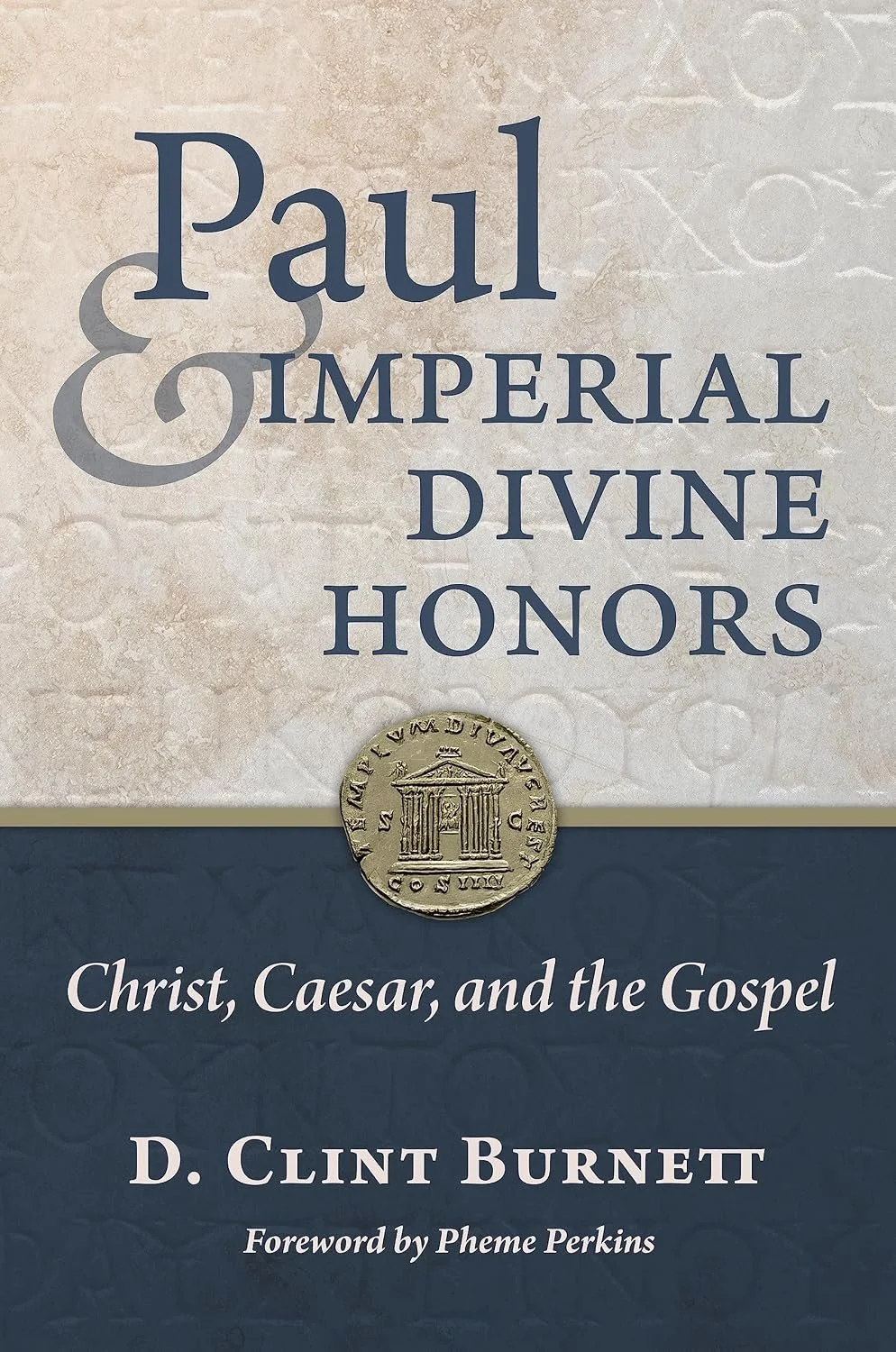
Fr. Clint holds a PhD from Boston College and has most recently published Paul & Imperial Divine Honors: Christ, Caesar, and the Gospel (Eerdmans, 2024). Fr. Clint specializes in bringing archaeological inscriptions to bear on the New Testament. Graffiti on walls, inscriptions on coins or on altars, and notes or receipts on papyri can all become clues to understanding a little bit more about life in the first-century Mediterranean world.
Saint James recently hosted its first Weekend in the Word, concluding a four-week sequence of readings from Philippians in our Sunday lectionary. To enrich these readings and the sermons on the same, Rev. Dr. Clint Burnett gave three lectures spanning Friday evening and Saturday morning. Fr. Clint adopted as his paradigm for the weekend “Cultivating the Mind of Christ,” breaking things down into the three categories of cultivating 1.) a eucharistic life, 2.) a sacrificial life, and 3.) a generous life.
Cultivating a Eucharistic Life
On Friday night we focused on Thanksgiving. Remember the words of the liturgy: “Let us give thanks to the Lord our God.” We call the Holy Communion the Eucharist because eucharistía is the Greek word for Thanksgiving. So a “eucharistic” life is a “thankful” life. It’s remarkable to remember that Paul is sitting in a Roman prison as he begins his letter with “I thank my God in all my remembrance of you” (1:3). It’s this foundation of thankfulness that allows Paul to see the hand of God in his imprisonment. And Paul rejoices that his imprisonment is serving to further the spread of the gospel.
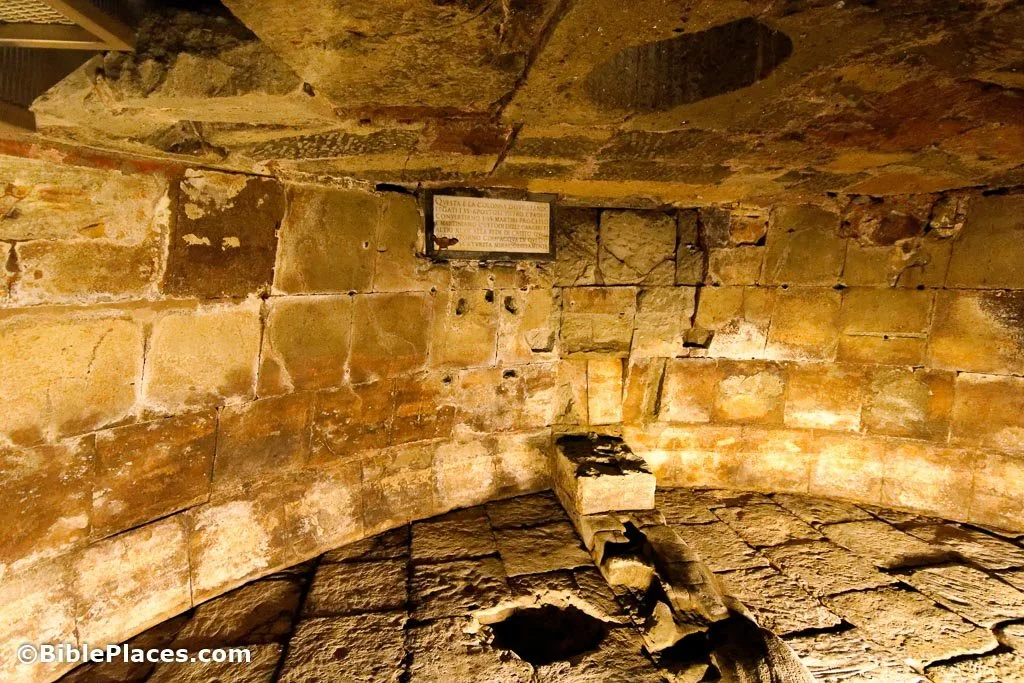
The “mamertine” prison—a first-century Roman prison, traditionally believed to have held St. Paul.
Fr. Clint helped us see the letter with fresh eyes by helping us envision what the Roman colony of Philippi was like. For one it was highly traditional, conserving Roman values across generations of the same aristocratic Roman families running the city (as evidenced by the family names in the historical record). Remember the charge against Paul in Philippi in Acts 16: “They [Paul and his companions] advocate customs that are not lawful for us as Romans to accept or practice.” According to Paul’s epistle, the Philippian Christians were suffering for Christ, engaged in the same conflict that Paul was. That may mean some of them had even been imprisoned like Paul. And a Roman prison was not somewhere you wanted to be. Underground with little light, you were on your own for food and provisions, relying on family and friends to bring what you needed.
Clint’s knowledge of Greek really helped us grasp words like phroneo, eucharisto, and koinonia (“participation” or “fellowship”). As Ryan Finney told me: “I found his translations and word meanings to be very helpful when understanding the text.” Most pastors, myself included, know just enough Greek to be dangerous. Fr. Clint, though, taught and read from the Greek text itself rather than an English translation. (Fr. Clint didn’t draw attention to this and many in the room probably assumed he was holding an English Bible.)
Fr. Clint gave us these practical applications for following Paul in cultivating a Eucharistic life:
Begin everything with thanksgiving (Philippians 1:3).
From our thanksgiving, God will produce joy in us (Philippians 1:4).
Have koinōnia with a local church that is part of the One Holy Catholic and Apostolic Church, preferably an Anglican Church (Philippians 1:5).
Be confident that God will complete his work in us and the world (Philippians 1:6).
Approve and thus choose the vital things, which we will see by the light and wisdom of the Messiah Jesus (Philippians 1:10).
Cultivating a Sacrificial Life
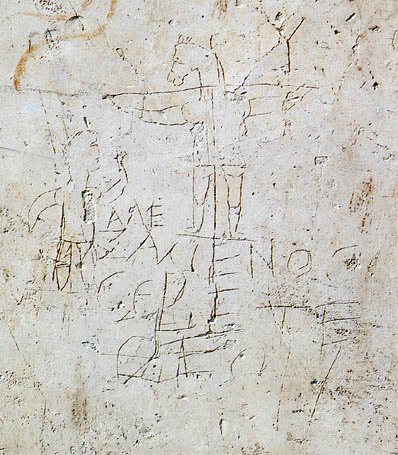
This Roman graffito (c. 200AD) depicts a man worshipping a crucified man with the head of an ass. Mocking Christians, the Latin says: “Alexamenos worships his God.”
We all know that Christ’s sacrifice for us is at the center of our faith. But how often do we remember that sacrificing for others should characterize how we live? Paul calls the Philippian church to unity by asking them to embrace the mind of Christ, a way of living that counts others as more significant than ourselves, even if that requires sacrifice. As Elizabeth Betrous noted from the teaching, “Suffering puts you in the footsteps of Christ; Paul describes it as part of God’s grace to participate in.” Fr. Clint emphasized how crucifixion wasn’t just meant to inflict pain but also shame. In the incarnation and crucifixion, Jesus went from the greatest glory to the greatest shame—all for us.
Fr. Clint offered this practical summary on cultivating a sacrificial life:
It is required of Christians who wish to be faithful citizens of heaven.
It only occurs within the Church—notice all the second person plural verbs that could be rendered as “you all” and “y’all.”
It stems from the phronesis of the Messiah, which consists, above all, of paying attention to the needs and affairs of others (Philippians 2:4), and when we have the power and ability to help (Philippians 2:6), it is our duty to do so.
Finally, St. Paul provides us two good examples: (1) St. Timothy was set to leave St. Paul’s side, journey to Philippi, spend time with them, and bring back a report to St. Paul who was concerned about them; and (2) St. Epaphroditus left Philippi to see St. Paul to bring him a gift of money. In short, a sacrificial life is one of action, outside oneself.
Cultivating a Generous Life
It’s so valuable to read Philippians having in mind the relationship between Paul and the Philippians. Paul doesn’t correct the Philippians the way that he does the Corinthians, Galatians, and Thessalonians, for example. They have a special place in his heart. He helped found the Philippian church and they have supported him when no one else would. In writing to the Philippians, Paul took the opportunity to encourage them to embrace the mind of Christ and to rejoice. But the occasion for writing was to let the Philippians know that Epaphroditus had faithfully brought aid to Paul in prison and had recovered from his sickness. But along the way Paul’s relationship is so personal, that he takes time to ask two women, Euodia and Syntyche, to agree in the Lord.
Fr. Clint left us with these practical notes on cultivating a generous life:
Generosity extends beyond money, to our relationships and our time.
St. Paul asks Euodia and Syntyche to be generous with each other as his true comrade helps them to work out their problems.
We live in a country where the average American has vast more money and resources than most people in the world and throughout history. The one thing that we have less of today is time.
A Generous Life stems naturally from a Eucharistic and Sacrificial Life
When we are thankful for what we have, we will give more.
Studies show that lower to middle income families in America give a higher percentage of their income to charities than higher income earners.
To be generous, we have to learn to be content, which is hard for us as Americans.
Our entire economy is telling us that we need stuff in order to be happy.
Giving is a way that we literally and concretely demonstrate koinōnia.
Giving functions like a sacrifice to God.
Final Thoughts
Naturally, I forgot to take pictures of the event. We had 23 people attend, four of which were visitors. All of the feedback has been great, and people want to do it again. Jay Graham’s reflection is representative: “I loved the opportunity to spend time together digging into God’s Word. Father Clint’s insight into the culture of Philippi at the time Paul wrote this letter brought such a new richness to my understanding of this book!”
Appendix: In “Cultivating the Mind of Christ,” the word “mind” is related to the Greek verb phroneo, a word Paul uses ten times in the four-chapter letter to the Philippians. The word is hard to translate into English, but the noun-form of the word means something like “wisdom” or “right-mindedness.” The English Standard Version translates the verbal form in all kinds of ways in Philippians: “to feel” (1:7), “being of [the same] mind” (2:2), “being of [one] mind” (2:2), “have [this] mind” (2:5), “think” (3:15, 2 times), “minds [set on]” (3:19), “to agree” (4:2), “concern” (4:10, 2 times). The word has a philosophical background, and ancient philosophy (more than modern philosophy) involved a whole way of life, not just a way of thinking about reality. Paul wasn’t just asking the Philippians to think a certain way but to live it.