Music and Mission at Saint James
Music—What’s it for?
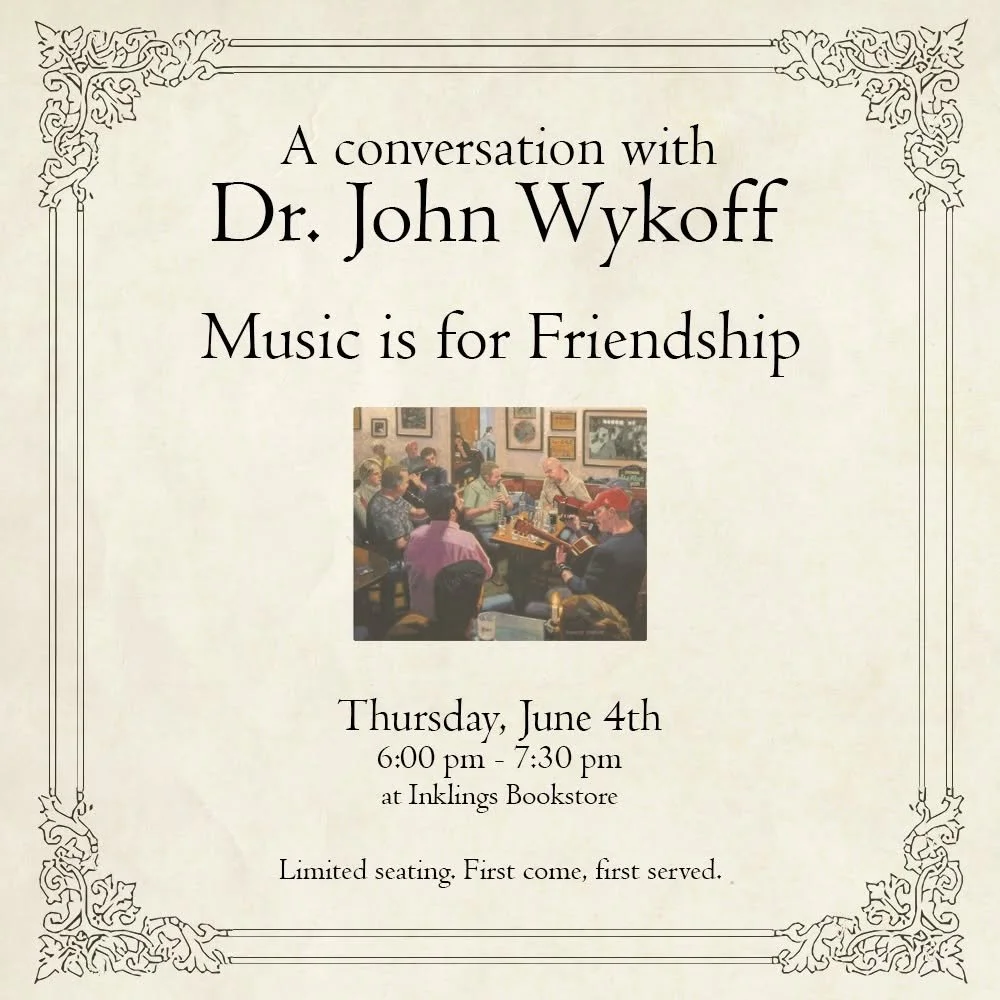
What is music for? I scratched down a little poem back in the spring called “Music is for Making” (included at bottom). That’s one angle on it. God created music as something that all humans are meant to participate in making (because it’s good for our soul). Another entry comes from Lee University’s Dr. John Wykoff who gave a lecture not too long ago called “Music Is for Friendship” at Inklings Bookstore. He explored the ways that music brings us together, as friends and as families and as communities. I’d like to think we were both unpacking the same phenomenon from different angles (and from different levels of expertise, no doubt). You see, today we’ve pretty much all been trained to think that music is for listening, and I think that that mentality, enabled and perpetuated by technological advances, has two direct results:
the loss of musical skill amongst non-specialists
the exporting of taste-making to a few executive suites in cities like Nashville, Los Angeles, and New York
When enabled by technology, music-is-for-listening unavoidably becomes music-is-for-consuming, which means that the power of music to shape the human heart is transferred from local communities to global corporate interests. Think of the role music has played in your life. Did music influence the way you thought about the world, society, and yourself, perhaps especially as a young person? Did you or your peers embrace a particular style of music as an identity? Or at least, did the music you listen to reinforce your identity? That’s power.
So it’s no small thing if music isn’t a thing that families do at a dinner table or that friends make in a living room. Because if you want to shape a young person’s heart, or anyone’s heart for that matter, curate their playlist.
What is music for? It’s for making, and the making of music makes the experiences and the practices and the values that cultivate friendship. So, better than curating a playlist to get to someone’s heart, make music with them. And to be clear, that’s not just for young people.
Music And Culture
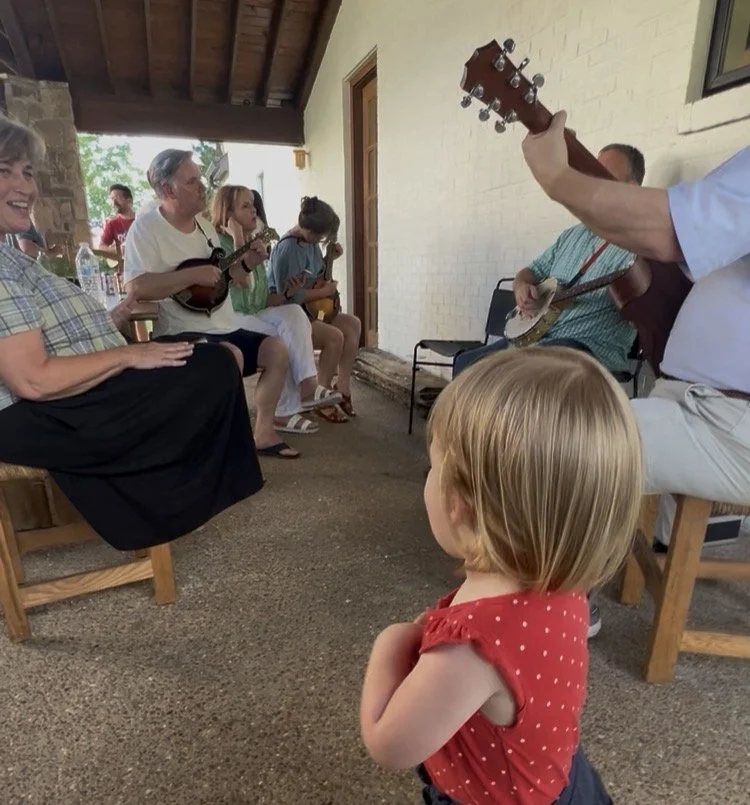
Pentecost, 2025
The church can’t get rid of Spotify, but can we make our own music? Most of us don’t think we can sing. We don’t play an instrument. Can’t read music or play by ear. We were formed in a world where music was for listening, so that’s pretty much all we did. Now, I’m speaking in general terms, of course. Thanks be to God for my family and church growing up that did care enough about music that I today can play an instrument or two. But our musical skills as a society have waned.
The music we participate in is significant because, whether we realize it or not, music shapes our hearts. That’s true at the individual level, and it’s true at the community level. Our community’s heart is expressed in our culture—the words and phrases we most often use, the things that we celebrate together, how we think of love (and marriage), what and how we eat at meals, whether we spend time in each others’ home, and more.
Now what does this have to do with the mission of the church? It depends on what the mission is. First off, I’m not using the word mission as a synonym for “objective” or “goal.” By mission, I mean the “sent-out-ness” of the church. Why have we been sent out into the world by God? I’d say that the primary mission of the local church is to cultivate the Kingdom of God in a place. Now part of that means to meet immediate needs. The poor will always be with us. But if we wish to perpetuate the Kingdom of God across time, it requires building culture.
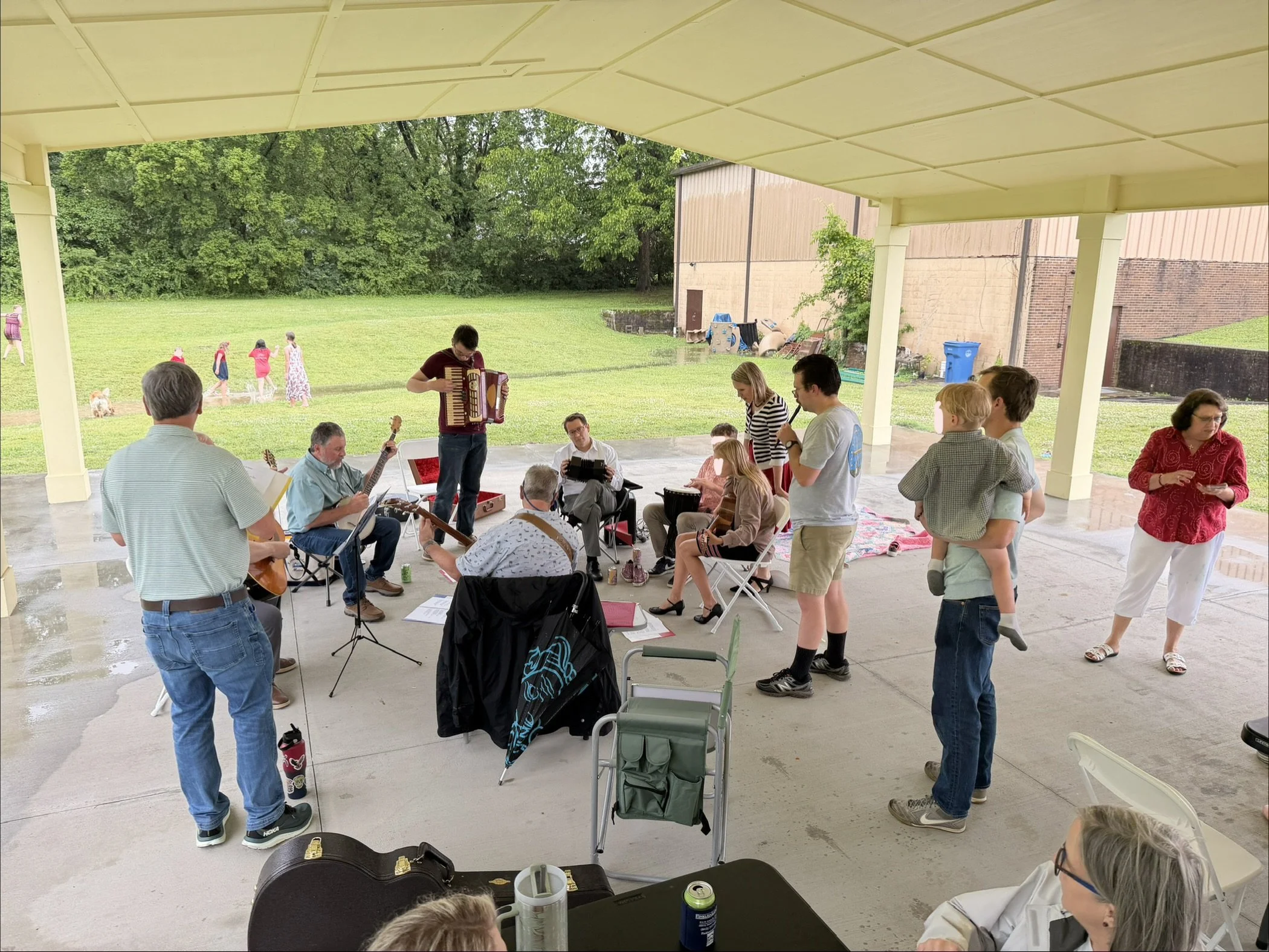
Pentecost, 2026
You can’t build culture without music, I think everyone knows that. The temptation, though, is to buy it off the shelf. But here’s the crucial question: Is a consumer culture a kingdom-of-God culture? Is a consumer culture even a human culture in any traditional sense? What if the creator God, when he created us in his image, intended for us humans to be creators? Then God must be calling us in this ecclesial moment to be redeemers too, redeeming our church music culture from the slavery of Contemporary Christian Music (and Christian Copyright Licensing International).
And so music is for mission. Not simply in the sense that music is a tool for meeting people out in the larger community, which it is, but in the sense that our primary mission is to cultivate the kingdom of God in a place, which means building culture, which means making music. It’s slow work because it’s not like Wonder Bread. The kingdom has to be freshly-milled, kneaded by our hands, and baked in our own ovens. The kingdom of heaven is like leaven that a woman took and hid in three measures of flour, till it was all leavened.
If you’ve ever made your own bread, or grown your vegetables, or made your clothes, you’ve probably felt what I’m failing to articulate. First-off, home-grown just tastes good. But more than that, since your voice will probably never sound better than Nat King Cole’s, there’s something transformative about the process of creating, especially when we do it together.
So where do we start?
Music and mission
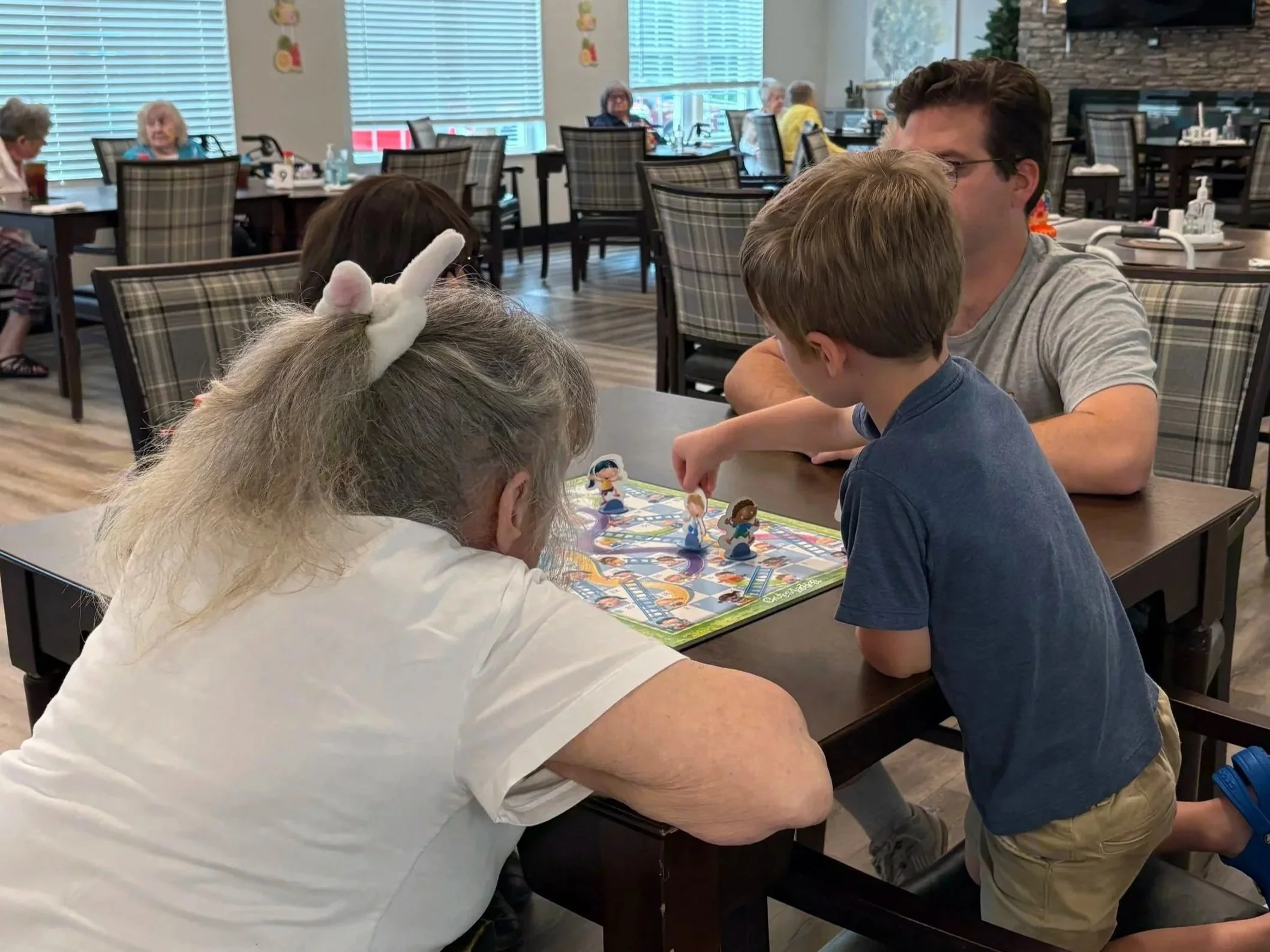
Playing board games with residents at Red Stone after playing music on the Feast of Saint James.
We have to start this musical mission in our homes. Sing around the table after supper. Or shift to the living room and sing. Or sing in bed before going to sleep. But sing! This isn’t a niche lifestyle. Just like singing the liturgy isn’t a matter of aesthetics. Singing at the table and chanting parts of the liturgy emerge from the same conviction: singing is a lifting up of speech. If you want to mean it more, if you want to feel what you say, then perhaps you should sing it. (And if you want to remember it, then sing it. I constantly catch myself singing meaningless pop songs from the ‘90’s and 2000’s—last night it was Backstreet Boys.)
“But doesn’t singing in homes just mean we’re singing on our own, rather than going out and building community?” No, that’s the thing. We’re not meant to just always be on our own in our homes. It’s another blog for another day, but hospitality is a Christian virtue commanded by St. Paul. Not everyone can always practice it in the same way, but a Christian community is a community where we spend time in each others’ homes. That’s part of kingdom culture. And so when we land in each others’ homes we also sing in each others’ homes and we eat and we pray. And once we’re eating, and praying, and singing together, that’s not so far off from doing church. Church on Sundays becomes not so much this weird thing we do once a week, but a time that we all set apart to all come together to join in something that we do during the week too.
Enough theory, here’s what we’ve been doing as a Saint James community. We sang at the Sethmans’ on Pentecost 2025. We played songs at the Lawrences’ when Coach Dan visited us in September. We sang at the Sethmans’ again in early October. Later that month, when we launched services at Silverdale Cumberland, we played under the pavilion after church. We had Lessons & Carols at the Lawrences’ in Advent. Then in Christmas we sang carols at the Wykoffs’. Then it was Twelfth Night at the Sethmans’ (and I’ll admit that I rapped at that one too). It was around that time that we began visiting and playing music for residents at Red Stone Estates (Independent Living Community) and Southern Oaks Assisted Living about once a month. We listened to Jazz at our final Easter Feaster (and some of us even got in on the act). Then there was Pentecost Pickin’ 2026. And we also sang at the Ooltewah BBQ Brawl.
Building culture through music may be slow work, but it’s worth it. Start in your home. Sing with others. Let it culminate in the pews. The vision is this: old and young unashamedly singing songs together, not from the page, but from their heart.
Music Is for Making
I was trying to find an old hymn, and I really found a bop.
Lutheran Lullabies—no face, no name—it’s probably AI slop.
A few hundred views for an old church song that sounded pretty good.
Tech gods are running by the rule that if you can do it, you should.
“If it sounds good, what’s the matter?” people will defend this.
“‘Country Roads’ in Anglican Chant with a metal drummer—the possibilities are endless!”
But it's about more than listening, it’s our humanity we’re forsaking.
It’s not about the listening, music is for making.
Music is formation—we sing to what we love.
The creator made us to create, but we’d rather throw in an ear bud.