Jesus at Table
Meals In Jesus’ Ministry
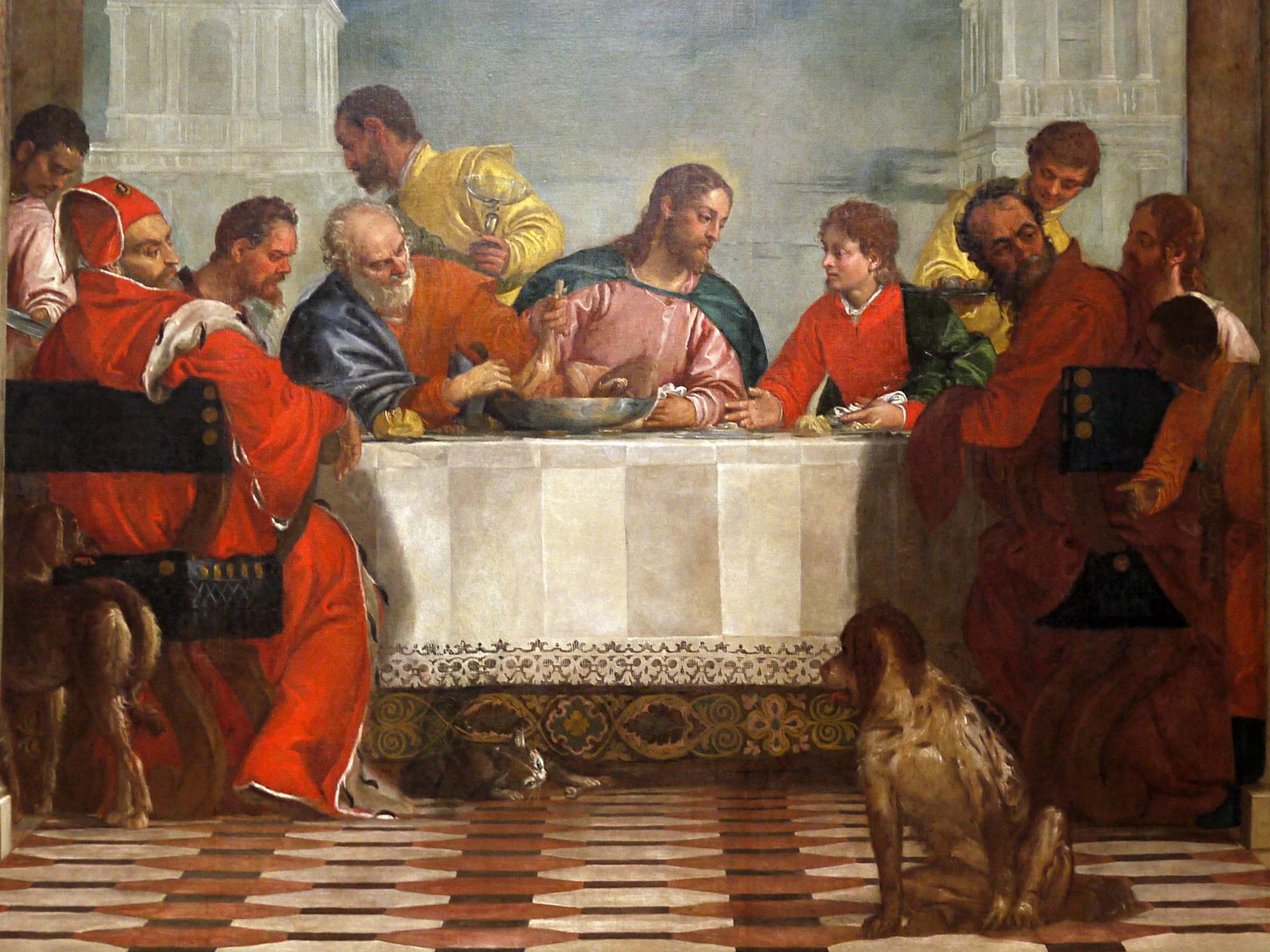
The Feast in the House of Levi by Veronese
As we read the gospels, we find that the home is an excellent place to build the Kingdom of God. In particular, a meal shared in a home is the setting for many of Jesus’ most significant teachings. It’s at a feast thrown by St. Matthew (Levi) that Jesus reveals himself as the physician who has come to bring sinners to repentance and the bridegroom for whom the wedding guests rejoice (Luke 5:29-35). As a guest dining at Simon the Pharisee’s house, Jesus shows the he has the power to forgive sins and that his forgiveness increases love in the forgiven (7:36-50). While eating at another Pharisee’s house, Jesus teaches about inward purity, indicting the Pharisees for their lack of it (11:37-52). Surprisingly, Jesus continues getting invited to Pharisees’ homes for meals! At one meal, he teaches them to heal on the sabbath (14:1-6), to be a humble guest (14:7-11), and to be a benevolent host (14:12-24). It’s because of meals with tax collectors and sinners (15:1-3) that Jesus tells the Pharisees and Scribes the “Lost” Parables: the Lost Sheep, the Lost Coin, and the Lost Son (15:4-32). Each parable ends with the “finder” inviting his or her friends and neighbors to rejoice with them, the third parable explicitly ending in a celebratory meal. The implication seems to be that Jesus’ meals with “sinners” are not merely evangelistic occasions, but also the culmination of evangelism. They are meals that celebrate Jesus finding sinners. Jesus’ meal with Zacchaeus is both the occasion and celebration of Zaccheaus’s repentance (19:1-10)
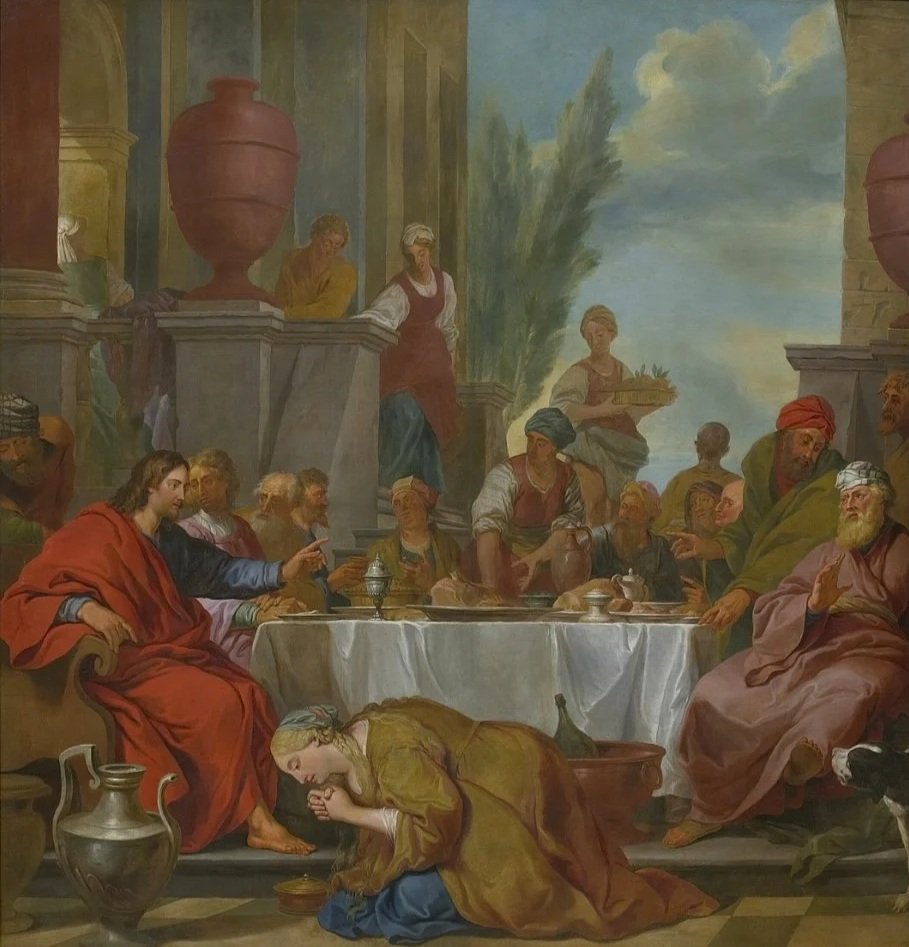
Feast of Simon the Pharisee by Jan van Orley
We could vastly expand this into a Biblical study of meals by going backward to the Old Testament or forward to Acts, Epistles, and Revelation. But let’s content ourselves with just two more of Jesus’ meals in the Gospels. (You make have noticed all of my citations are from the Gospel of Luke. Perhaps because he’s a physician and historian, St. Luke stands out among the evangelists in his interest in Jesus’ meals.) In the night before his death, Jesus arranged for a meal with his disciples (22:14-23), first caring for their needs by washing their feet. He was host and servant. And this meal inaugurated the meal that we share with him today. See Paul’s teaching in 1 Corinthians 10:14-22 and 11:17-34. Jesus gave us a meal in which we have fellowship through his sacrificial death. Finally, after a long conversation on the road to Emmaus, it was only in a meal that two of Jesus’ disciples recognized their risen Lord—“he was known to them in the breaking of the bread” (24:35).
Dining Like Jesus Today
Jesus’ way of life shows us that part of doing life together means eating together. And eating together declares a relational status, showing guests that they are accepted. After all, Jesus’ meals gave him the reputation as a “friend of sinners” (Luke 7:34). The table can be our platform to learn about others and for them to learn about us. If the Gospels were given to us for our instruction, then meals can still become a way to celebrate Jesus finding us, to remember Jesus dying for us, and perhaps even to find Jesus dining with us.
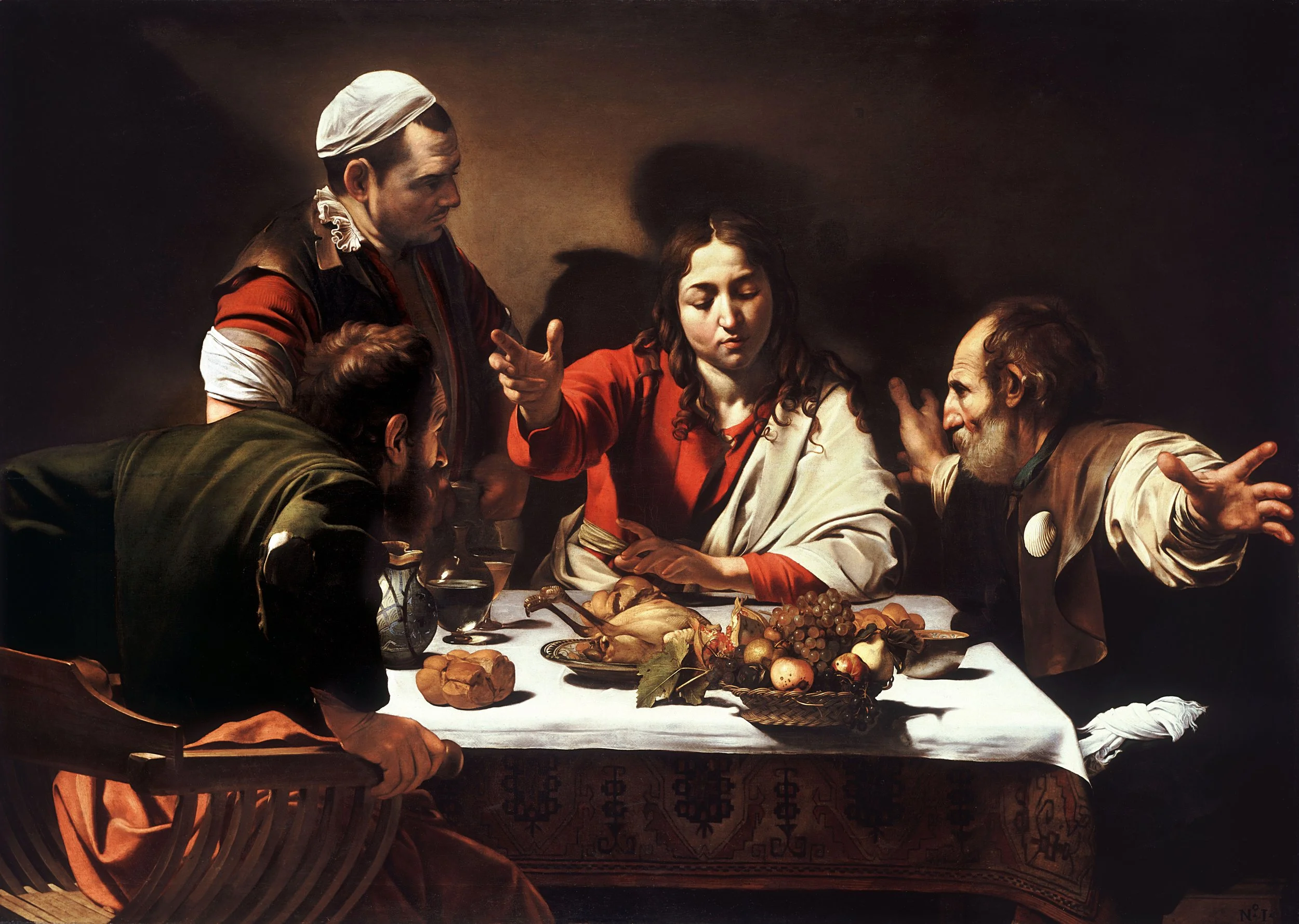
The Supper at Emmaus by Caravaggio
Here are some practical considerations for inviting others to be part of your life over a meal:
Who: Think about the people in your life. Do you have neighbors? Coworkers? Fellow hobbyists you’ve gotten to know? Pray for the Holy Spirit to lead you in discerning if you should invite them into your life through a meal.
What and Where: I’m suggesting that a meal with someone in your home invites a deep level of relationship. Yet there are plenty of legitimate reasons why a meal in your home isn’t the best option. Instead of your home, maybe you invite someone to your table in the lunchroom. Or, of course, there’s always eating out.
How and When: Yes, there’s a certain level of cleanliness that’s wise. You don’t want your guests to feel grossed out or unsafe. And having things clean and elegant certainly is a way of honoring a guest. But we can’t honor guests that aren’t there. Sometimes high standards can burn us out and keep us from practicing hospitality at all. Remember the saying, “Don’t let perfection be the enemy of the good.” Keeping things simple can let us practice hospitality on a regular basis, which is probably the best way to deepen relationships with the people around us.
Why: The goal is not a gospel presentation, nor is it a church invitation. In fact, let’s not think in terms of goals at all. Hospitality is a practice in obedience to the Holy Scriptures. And a follower of Jesus is the kind of person who welcomes others, in whatever capacity they can. We pray that as we welcome others, God would draw our guests closer to him.
Jesus taught us to be humble guests, taking the lowest seat at the table. And he taught us to make guests of the humble, inviting to our tables those who can’t return the favor. Jesus humbled himself to the point of death on a cross so that he could exalt us to sit at his table in his kingdom. May the Holy Spirit guide us to humble ourselves and to make room at our tables with the hope that our guests may one day be exalted with us to eat with the King.